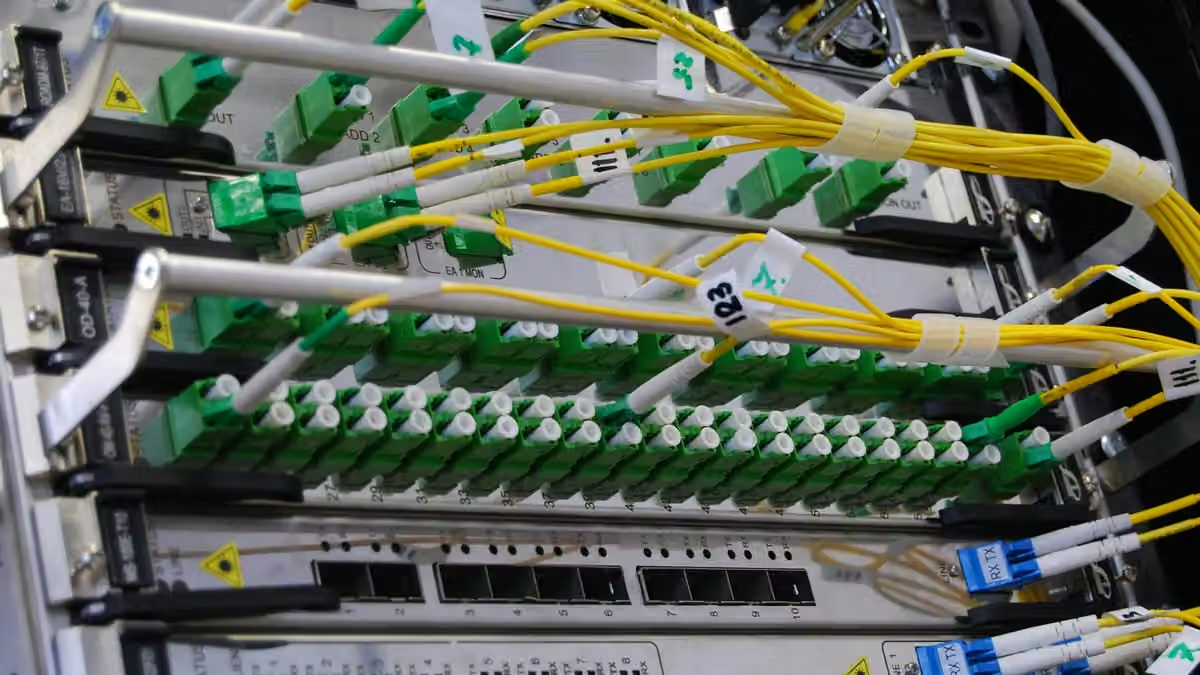
Cloud computing runs on distributed server networks. That is the plain answer, and it is the part that matters most when people ask what a cloud computer service really is.
I keep coming back to one simple point: the cloud is not one giant machine. It is a set of machines spread across racks, rooms, and data centers. The service hides that spread from the user. The user sees one place to store data, run code, or ask for a database. Under the hood, many servers do the work.
That is why cloud systems are built around distribution. A request may land on one server, while data lives on another. A load balancer may send traffic to a healthy node when a busy one slows down. Storage may be copied across several machines so the service can keep working if one box fails. The service feels single and smooth from the outside. The hardware is not single at all.
This also explains why cloud services scale so well. If demand rises, the provider can add more servers and spread the work. If demand drops, capacity can shrink again. The important idea is not magic elasticity. It is coordinated sharing across a pool of machines. The pool is what makes the service flexible.
A cloud computer service also depends on layers. There is physical hardware in data centers. There is networking between servers. There is software that places work, moves data, and watches failures. Virtual machines and containers sit on top of that stack and make the hardware easier to use. They do not remove the distributed system. They make it easier to manage.
That point matters because cloud computing is often explained as if it were only remote access. Remote access is real, but it is not the core design. The core design is distributed control. Compute, storage, and networking are split across many servers, then tied together by software. That split is what lets cloud providers give the same service to many users at once.
I think people sometimes miss the tradeoff here. Distributed server networks bring reach, scale, and fault tolerance. They also bring more moving parts. A failure can happen in the network, in storage, in a control plane, or in the software that routes work. So cloud services are not simple just because they are easy to use. They are complex systems wrapped in a simple interface.
There is one honest limit worth saying out loud. The cloud is not one fixed shape. Some services are highly distributed across regions. Some are more centralized in a few data centers. Edge setups push compute closer to users. Hybrid and multicloud setups spread parts of the system even more. So the exact layout changes from service to service. The shared idea stays the same: the work runs on a network of servers, not on one lonely box in a corner.
That is the practical answer to “cloud computer service.” It is a service built on distributed server networks, hidden behind a simple front end. The user gets shared compute, storage, and networking on demand. The provider gets a system that can grow, move work, and recover from failures. The hard part is not that the cloud exists. The hard part is keeping that network of machines behaving like one service.
That is the kind of idea The Model Log tries to hold onto: one practical AI concept, one working example, and one honest look at what actually works.