AI Geek Programmer Blog
Machine learning, computer vision, deep learning and artificial intelligence engineering.

AI systems use cloud computing for scalable services
- AI Geek Programmer
- 26 October 2026
AI systems use cloud computing for scalable services. That is the plain answer, and it is the one that matters most here.
Read article
AI models now protect healthcare networks from ransomware
- AI Geek Programmer
- 25 October 2026
AI models now protect healthcare networks from ransomware. That is the short answer, but the useful part is how and how far they really help.
Read article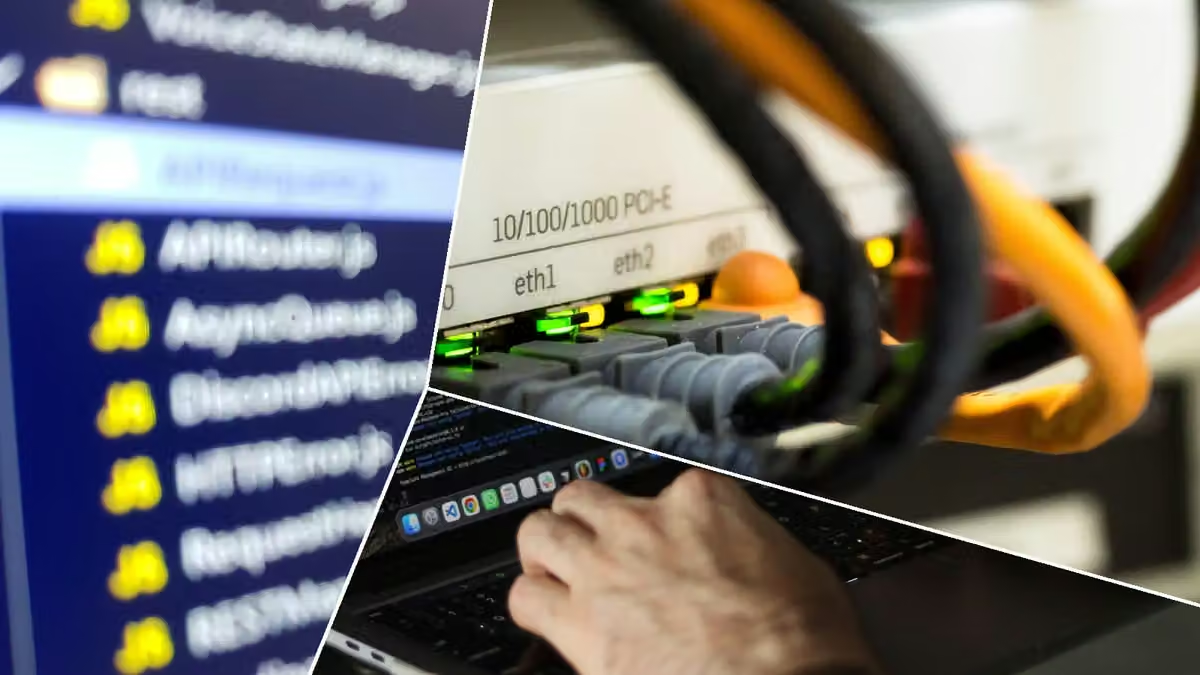
AI automates smart contract audits and boosts developer velocity
- AI Geek Programmer
- 25 October 2026
The hard problem is not making AI write Solidity. The hard problem is knowing whether the result is safe enough to hold real value.
Read article
AI systems require structured software architecture
- AI Geek Programmer
- 24 October 2026
AI systems require structured software architecture. That is the plain answer, and it matters because AI code does not stay simple for long.
Read article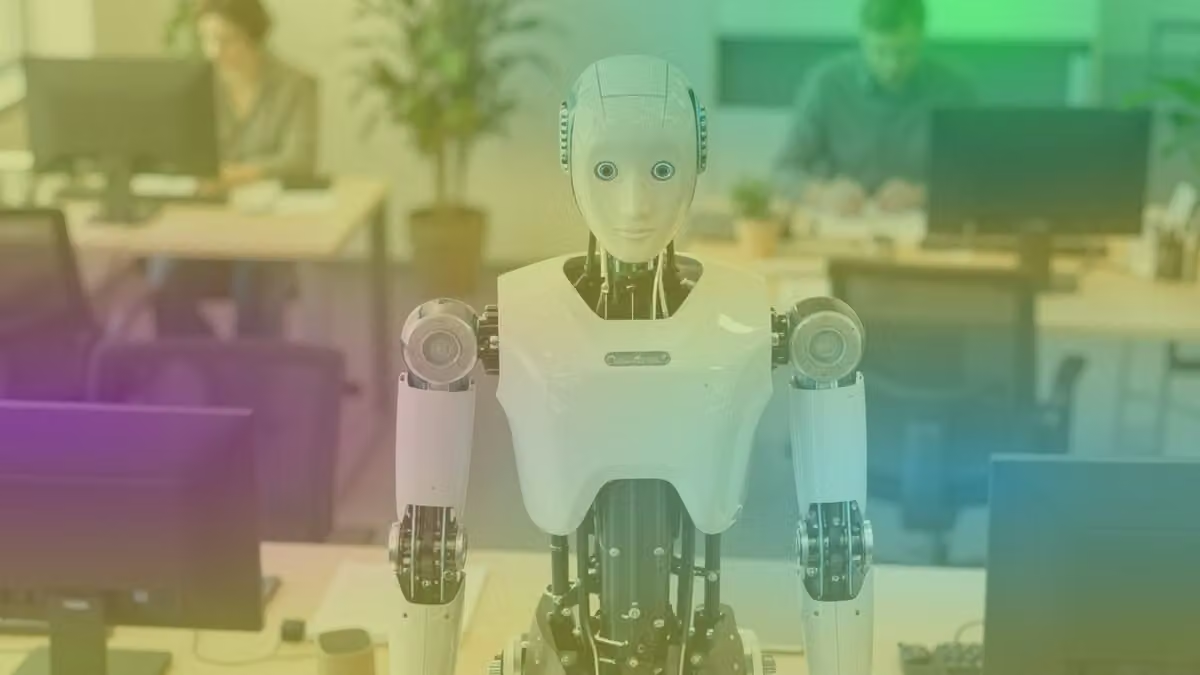
Deep neural networks power modern AI breakthroughs
- AI Geek Programmer
- 24 October 2026
Deep neural networks power modern AI breakthroughs.
Read article
AI training relies on massive datasets and powerful GPUs
- AI Geek Programmer
- 23 October 2026
AI training relies on massive datasets and powerful GPUs.
Read article
Generative AI uses machine learning to create new content
- AI Geek Programmer
- 23 October 2026
What problem does generative AI solve? It takes the pattern-finding power of machine learning and turns it into content creation.
Read article
On Cloud refers to software running on remote servers
- AI Geek Programmer
- 22 October 2026
On cloud refers to software running on remote servers. The software is not running only on your laptop, phone, or office computer.
Read articleTags
- machine learning
- artificial intelligence
- deep learning
- shape recognition
- python
- keras
- convolutional neural networks
- numpy
- cifar10
- convnets
- tensorflow
- ai
- overfitting
- anaconda
- mnist
- pytorch
- data augmentation
- development environment
- dropout
- GPU
- nlp
- scikit-learn
- transformer architecture
- batch normalization
- blockchain
- digits dataset
- google colab
- huggingface
- internal covariate shift
- k-nn