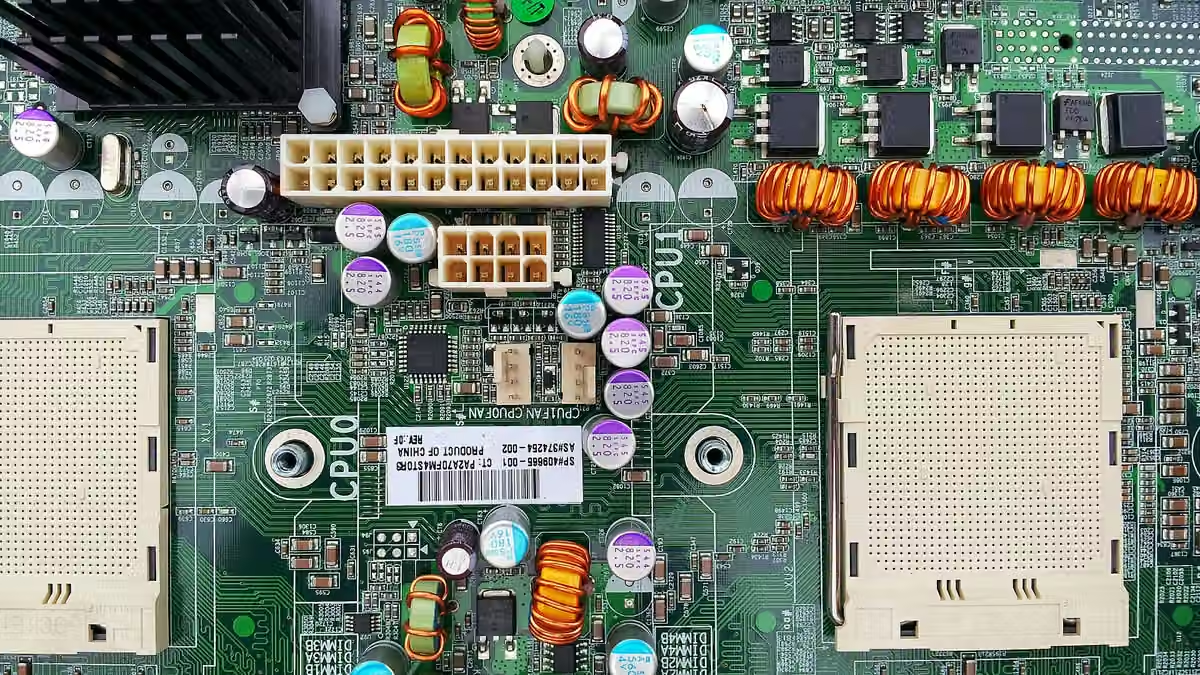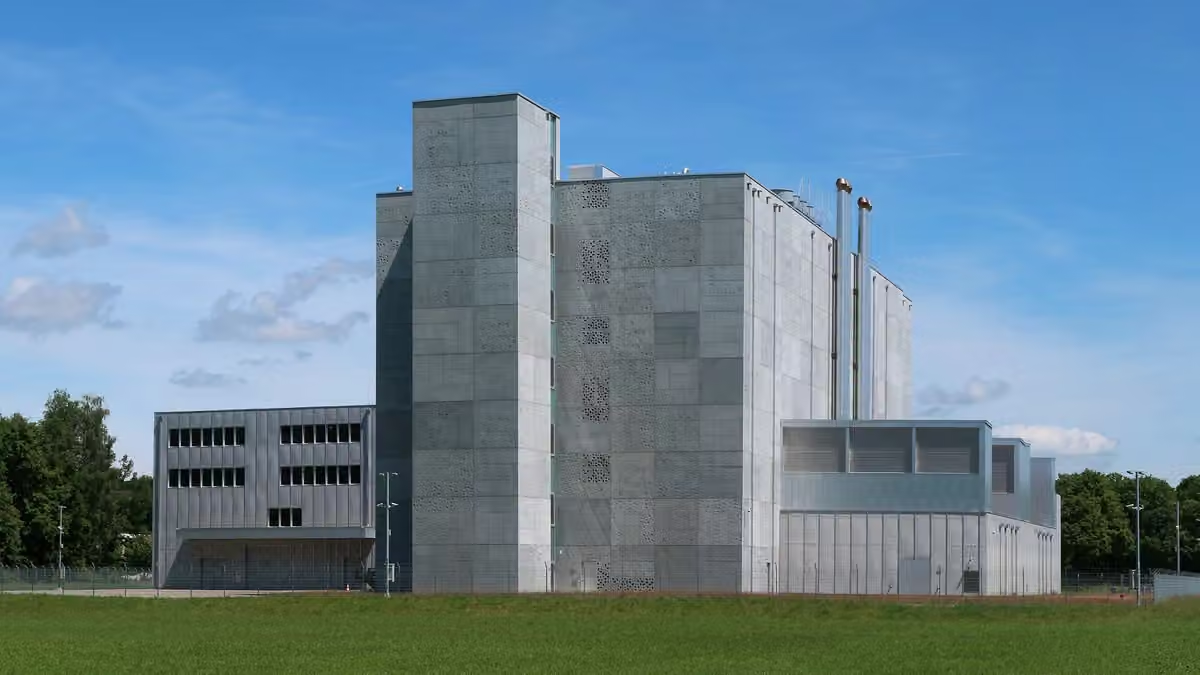
AI-driven data centers cut costs and boost efficiency, but only when the system is tuned for the work it runs. That is the plain answer. The savings come from using AI to manage power, cooling, scheduling, and hardware use with less waste.
I keep coming back to one fact: a data center spends a lot of money on things that do not do the main work. Power distribution, cooling, spare capacity, and manual ops all add cost. AI helps by watching the site in real time and adjusting settings faster than a human team can do by hand.
Cloud managed data center services fit this pattern well. In that model, the provider runs much of the physical and control layer. They manage the servers, power, cooling, network, and support tools. AI then sits on top as a control layer. It looks for load shifts, hot spots, idle machines, and poor airflow. It can move work, change cooling behavior, and keep machines closer to their useful range.
That matters because AI workloads are hard on infrastructure. They can push power use up fast. They also create heat fast. Heat then drives more cooling cost, and cooling cost is not small. In many modern sites, cooling is one of the biggest non-compute expenses. When the system can reduce wasted cooling or improve power use, the savings are real.
The key point is not that AI makes data centers magical. It makes them more exact. A well managed site can place work on the right machine at the right time. It can avoid running gear at low load when demand is light. It can also spot patterns that a fixed rules system may miss. That can lower energy waste and cut the need for excess headroom.
I think the best way to see this is through three common uses.
First, AI can help with cooling. It can read sensor data and change fan speed, chillers, and liquid cooling flow based on current heat, not a rough guess. That is useful because overcooling burns money, and undercooling risks faults. The job is to stay near the edge without crossing it.
Second, AI can improve power planning. It can predict when demand will rise and when it will fall. That lets operators spread load better across racks and sites. It can also help find power chains that waste energy or run too close to limits.
Third, AI can reduce operations work. Managed services often generate a lot of alerts. Many are noisy. AI can group related alerts, spot the real issue, and cut the ticket pile. That saves staff time and shortens response loops. Less manual triage means lower operating cost.
There is also a hardware side to this. AI-focused data centers often use newer cooling designs and denser racks. Some use liquid cooling because air cooling alone is less efficient at very high heat loads. That can reduce wasted energy, but it also raises design and repair complexity. The bill shifts, it does not vanish.
This is where the honest limit shows up. AI-driven control is only as good as the data it gets. Bad sensors, poor labels, or stale rules can make the system worse. A model can also chase short term savings and miss risk. If it saves power by packing heat too tightly, the site may get less stable. If it overreacts, it can create churn instead of order.
Another limit is that cost cuts do not come for free. You still need good telemetry, good control software, and people who know when to trust the model. The upfront work can be high. Integration is often the hard part. Old data centers with weak instrumentation do not become smart by wishful thinking.
So the clean answer to the reader’s question is this: cloud managed data center services use AI to trim waste in power, cooling, and operations, and that can cut costs while lifting efficiency. The strongest gains come from better control, not from hype. The weak point is still the same one I see in many AI systems: the result depends on the quality of the data, the site design, and the guardrails around the model.
That is the kind of practical AI story I want The Model Log to keep telling: one useful concept, one working example, and one honest look at what actually works.