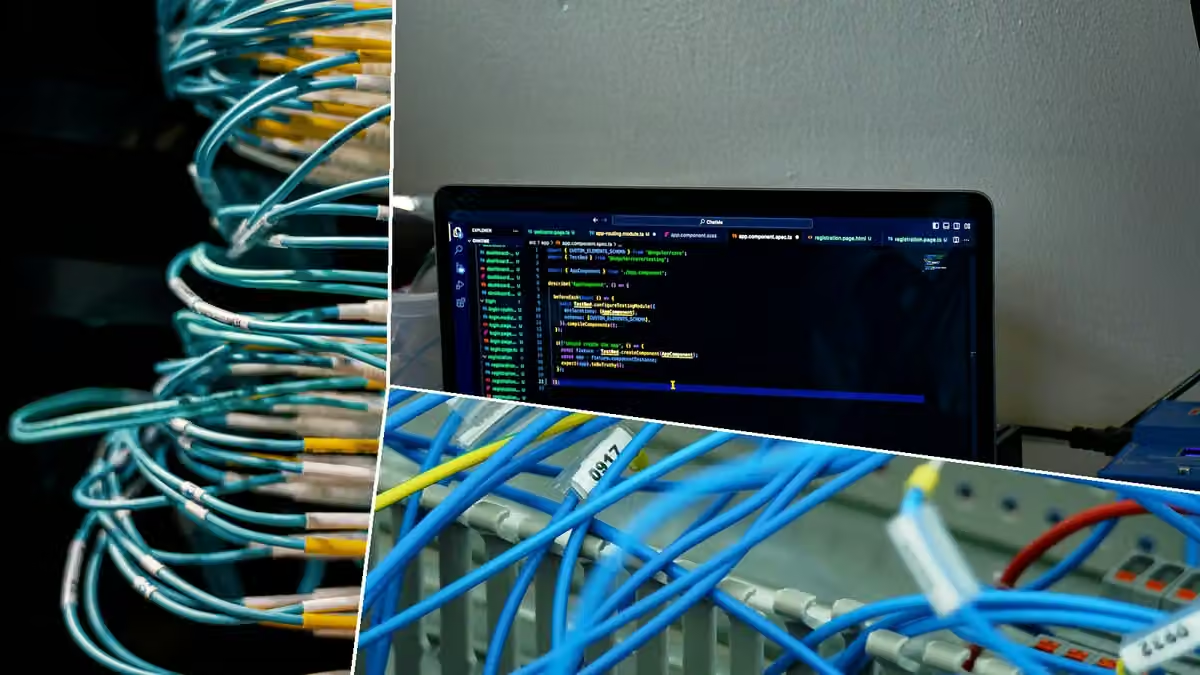
AI systems rely on cloud service infrastructure. That is the plain answer, and it is the part people often skip when they talk about models as if they live by software alone.
I keep coming back to a simple fact. A modern AI system is not just a model file. It needs compute, storage, networking, and a service layer around it. In practice, that usually means cloud infrastructure, or something built like it.
The model may be the visible part. The service is the part that makes it useful. It takes requests, runs inference, sends data to the model, and returns the result. It also handles scaling, logging, auth, versioning, and failure handling. Without those pieces, the model is just code sitting still.
That is why cloud services matter so much. They provide the machines that run the model, often with GPUs or other accelerators. They also provide the pipes between services, the storage for model weights and data, and the tools that keep the system alive when demand rises. For many teams, cloud service infrastructure is the fastest way to get from a trained model to a working product.
This is especially clear in inference. Inference is the step where a trained model produces output from new input. That step needs predictable runtime behavior. It needs enough memory, enough bandwidth, and enough control over latency. Cloud platforms now package that work as managed inference services, where the provider handles serving, autoscaling, and much of the system setup. That removes a lot of plumbing from the application team, even if it does not remove the hard parts.
I think this is the part that gets missed in casual AI talk. People focus on the model architecture, then act surprised when the real work starts after training. Training is expensive, but serving is where the system meets users. A model that cannot be loaded, scaled, monitored, or secured is not a production system. It is a lab artifact.
Cloud service infrastructure also helps with data access. Many AI systems need retrieval, caching, and connections to object storage or databases. The model is often only one piece in a larger chain. A request may pass through an API gateway, a feature store, a vector index, a prompt builder, and then the model service. Each piece depends on cloud services to stay connected and available.
There is a practical reason this pattern won. AI workloads change size fast. One day the system sees light traffic. The next day it needs far more capacity. Cloud infrastructure gives teams elastic scaling, managed networking, and a faster path to deployment. It is not magic. It is just a cleaner way to rent the parts that AI systems consume in large amounts.
Still, there is a limit here. Cloud dependence is not the same as cloud certainty. The bigger the system gets, the more it depends on vendor behavior, service limits, and region health. Cost can climb fast. Latency can also rise when the model sits far from the data or the user. Some teams move part of the stack to edge or on-prem systems for that reason, but that adds more operational work, not less.
The honest view is that cloud service infrastructure is now the default backbone for most AI systems, but it is not a free lunch. It makes AI easier to ship, scale, and maintain. It also turns infrastructure into part of the product, which is where many projects learn their first hard lesson. The model matters. The service around it matters just as much.
That is the practical point I want to leave with. AI systems rely on cloud service infrastructure because the model alone is not a system. The service layer is where AI becomes reliable software, and The Model Log keeps that same focus: one practical AI concept, one working example, and one honest look at what actually works.